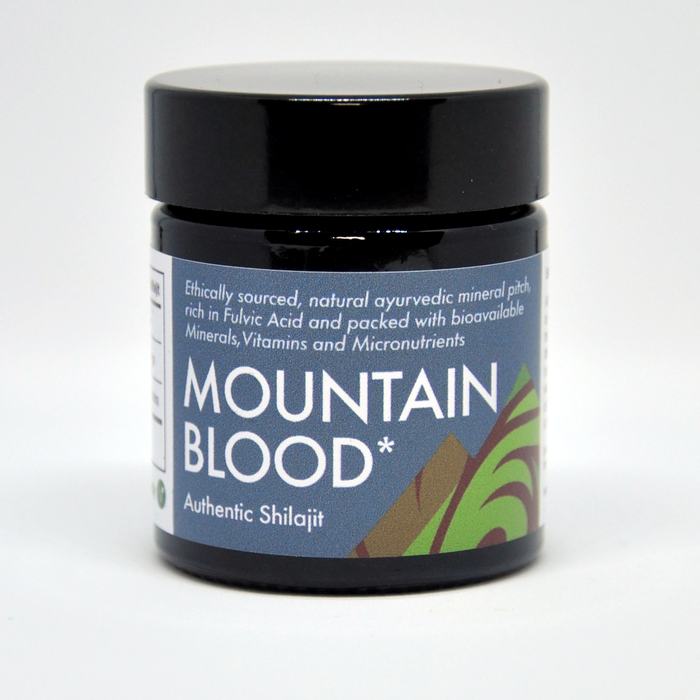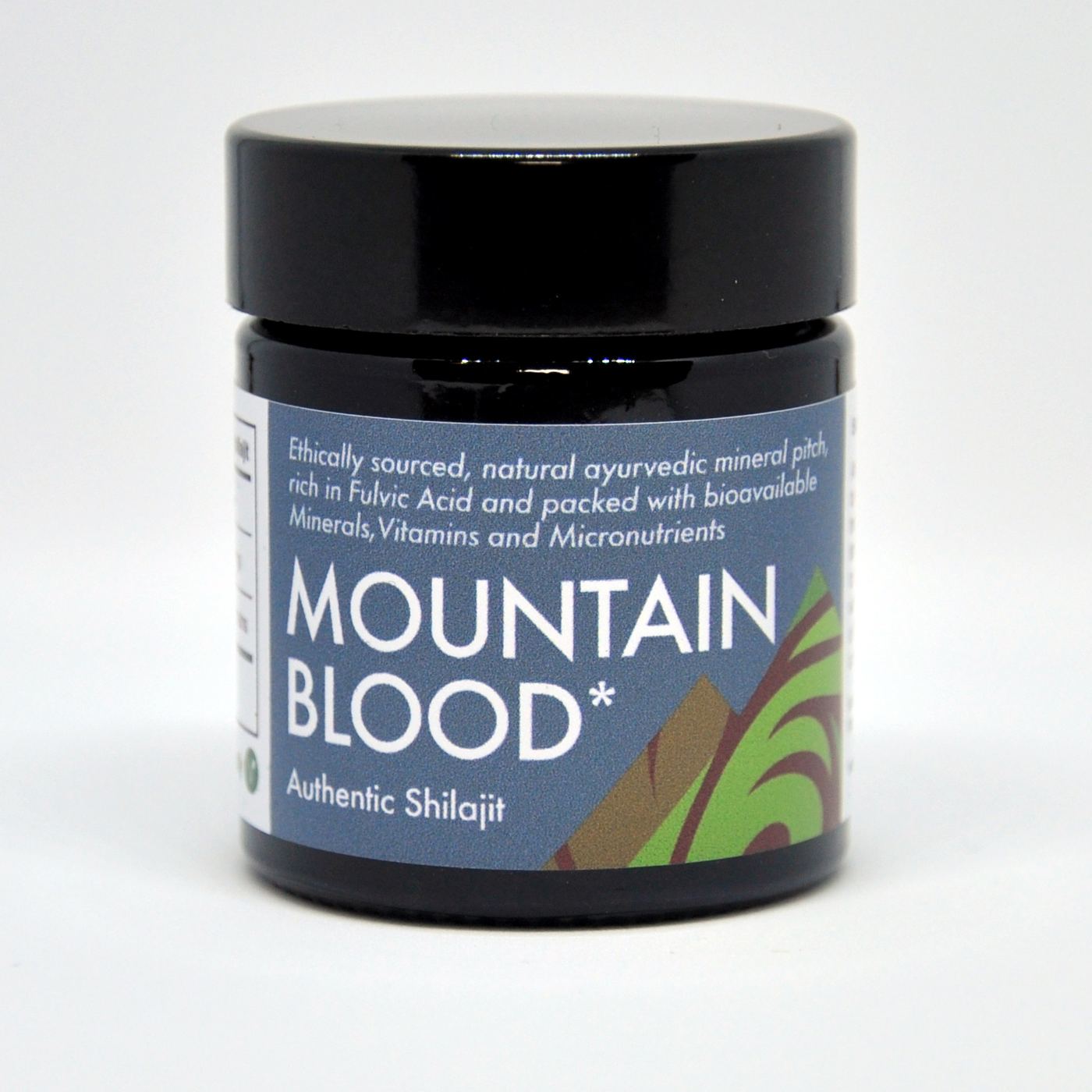
Every other category on this site is a plant or a mushroom. Shilajit isn't, and that one difference changes what actually matters when you're choosing a product: with Shilajit, purity isn't a nice-to-have — it's the whole decision.
What Is Shilajit?
Shilajit is a sticky, tar-like resin that seeps from rock faces in the Himalayas and other high mountain ranges (including the Altai, Caucasus, and parts of Central Asia), usually during warm months. It forms over very long periods as plant matter slowly decomposes and becomes trapped in mineral-rich rock. It's collected by hand, then purified before it's sold.
In Ayurvedic medicine Shilajit is considered a rasayana — a rejuvenating tonic — and has been used for centuries for vitality, stamina, and general wellbeing. In Central Asia it's known as mumijo and has a similarly long traditional history.
Modern interest centers on its fulvic acid content (an organic compound formed during decomposition), compounds called dibenzo-α-pyrones, and its broad profile of trace minerals.
What the Research Actually Looks At
Human research on Shilajit is limited and mostly small. Studies have looked at:
- Testosterone Preliminary: in a placebo-controlled trial of healthy men aged 45–55, 250mg of purified shilajit twice a day for 90 days raised total and free testosterone and DHEAS compared with placebo, while LH and FSH stayed stable. It's one trial.
- Sperm quality Preliminary: in 28 men with low sperm counts who completed 90 days of 100mg twice a day, total sperm count rose 61% and testosterone 24%, but there was no placebo group.
- Muscle fatigue Preliminary: in an 8-week trial of 63 active young men, 500mg a day (but not 250mg) helped preserve strength after a fatiguing workout, but only in the stronger half of participants.
- Mitochondrial function and aging — mostly lab and animal research exploring how Shilajit's compounds affect cellular energy production.
Much of the published human research used a specific, purified, standardized extract (such as PrimaVie) rather than raw resin bought online. So it's reasonable to be interested in Shilajit, but it's not reasonable to expect every jar sold online to match what was studied.
Why Purity Is the Whole Story
Because Shilajit comes out of rock rather than off a farm, it doesn't have the usual herb considerations — there's no species to confirm, no extraction ratio to compare. What it does have is inherent risk:
- Raw, unpurified Shilajit can contain toxic metals. A 2024 review found shilajit samples can contain dozens of metals, including lead, arsenic, cadmium, and mercury; most reported samples were within WHO and FDA limits, but some studies found levels above them. Raw Shilajit should never be eaten as-is — it must be purified.
- Adulteration is a risk with lower-quality products — Shilajit is expensive, and imitation products padded with other substances exist.
- "Premium" and "Himalayan" on a label don't prove anything. Only testing does. The same goes for "organic" and "natural"; see how to choose a clean herbal supplement.
Third-party lab testing for heavy metals — ideally a Certificate of Analysis (COA) you can actually read, from an independent lab, for the specific batch — is the one thing worth insisting on before anything else.
Resin vs. Capsules vs. Powder vs. Drops
| Form | Pros | Cons |
|---|---|---|
| Resin | Traditional form; harder to adulterate convincingly; easy to see and handle | Sticky, strong earthy/bitter taste; dosing by eye |
| Capsules | Convenient, precise dose, no taste | You can't see what's inside; usually a dried or powdered extract |
| Powder | Easy to mix, often cheaper | Easiest to adulterate; quality varies widely |
| Liquid drops | Easy to take | Concentration often unclear |
No form is automatically "the real one." Resin is the most traditional, but a well-tested capsule is a better buy than an untested resin.
How to Take Shilajit Resin
- Dose: trials used 200–500mg a day, often split into two doses. For resin, that's roughly a pea- or rice-grain-sized amount, but that's only an estimate, so use the product's measuring spoon if it has one.
- Dissolve it: stir into a glass of warm (not boiling) water, tea, or warm milk until dissolved. You can also place it under the tongue, though the taste is strong.
- Timing: many people take resin in the morning. In the sperm-count study, capsules were taken twice a day after meals.
- Handling tip: resin hardens when cold and softens when warm. If it's too hard to scoop, warm the jar in your hand for a minute; if it's too sticky, briefly chill the spoon.
- Start small: begin at the low end and increase gradually over a week or two.
Do Home "Purity Tests" Work?
You'll see a lot of advice online about testing Shilajit at home — for example, checking whether it dissolves fully in warm water, whether it becomes brittle when cold and soft when warm, or whether it burns. These can hint that something is at least resin-like, but they cannot detect heavy metals — which is the actual risk. Treat them as curiosity, not proof. A lab report is the only real test.
What About Fulvic Acid Percentages?
Products commonly state a fulvic acid content, anywhere from roughly 50% to over 90%. It's a reasonable signal, but an imperfect one: there's no single standard test method, so percentages from different brands aren't always measured the same way, and a high fulvic acid number says nothing about heavy metals. Use it as a secondary comparison after confirming testing.
Side Effects and Who Should Be Careful
Purified extracts were well tolerated in the small trials, and the 90-day sperm-count study found no change in liver or kidney markers. Users report mild digestive upset, dizziness, or feeling overheated, but trials haven't measured these. Be cautious and talk to a doctor first if you:
- Are pregnant or breastfeeding.
- Have hemochromatosis (iron overload) or another condition affected by mineral intake.
- Take medication for blood pressure or blood sugar. Effects on either haven't been studied in people, so this is a precaution.
- Have a hormone-sensitive condition, given its study in relation to testosterone.
Beyond that, sticking to a lab-tested brand is the main safety step within your control.
Shilajit and Other Supplements
Shilajit is frequently paired with Tongkat Ali in men's health routines, and in Ayurveda it's often combined with Ashwagandha. If you're starting more than one, introduce them a week or two apart so you can tell how each affects you. For a full side-by-side, see Tongkat Ali vs. Shilajit.
Buyer's Checklist
- Third-party heavy-metal testing — ideally a batch-specific COA you can read.
- Clear statement that the Shilajit is purified.
- Fulvic acid percentage, as a secondary signal.
- Stated origin (e.g., Himalayan, Altai) and an included measuring scoop for resin.
- Skepticism toward very cheap products and exaggerated "85+ minerals" marketing without test data.
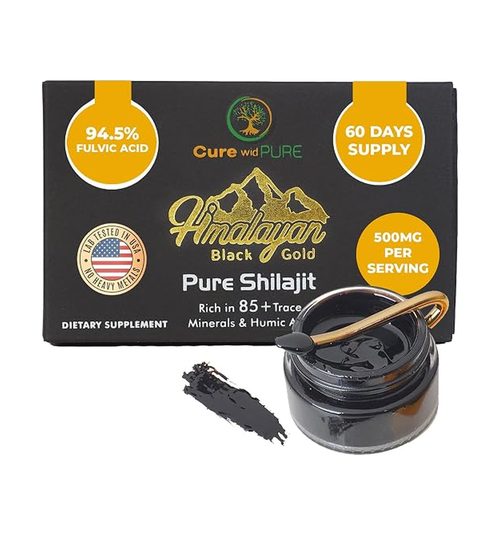
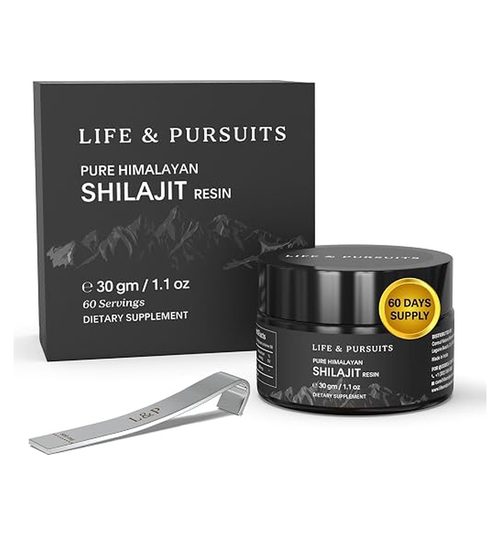
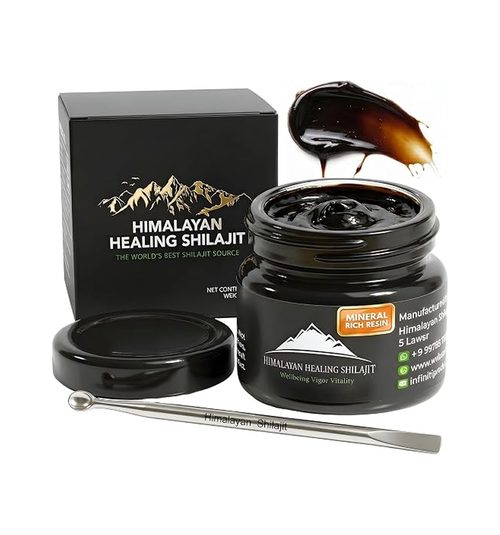
Below are three Shilajit products on HighIQ Nootropics — worth comparing on their lab-testing claims first, and their stated fulvic acid percentage second.