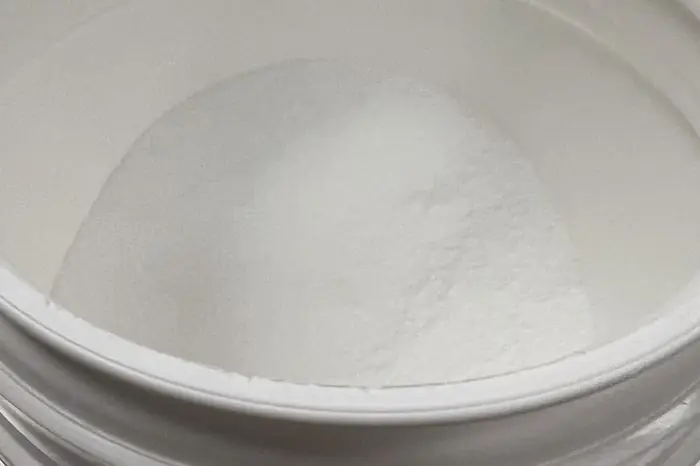
Creatine monohydrate powder in an open tub

Photo: Awkwafaba, CC BY-SA 4.0, via Wikimedia Commons

Creatine for Women

Creatine for Women: Menopause, Over 40, Muscle, Bone, Dose, and Safety

The Short Answer

A 2026 meta-analysis of seven trials in postmenopausal women (608 women) found creatine gave small gains in lean mass (about 0.4kg) and leg-press strength (about 7.5kg) over placebo, with benefits when 5g a day or more was combined with resistance training. Bone density didn't change. Side effects were mild and similar to placebo. Evidence for perimenopause and pregnancy is limited, so ask a doctor. Creatine isn't a fat-loss supplement: the usual effect on the scale is a small weight gain.

Most creatine research was done in young men, which is why many women wonder whether the results apply to them. The picture has improved: there are now randomized trials in women, particularly after menopause, plus reviews of what's known across the female lifespan. This guide covers what those trials found for muscle, bone, mood and weight, how much women used, and what remains unknown. For what creatine is and what it does for memory, see our creatine guide, and for safety concerns like hair loss and kidneys, creatine side effects.

Does Creatine Work for Women?

For muscle, yes, modestly, especially alongside strength training. A 2025 review of creatine in women's health concluded it has shown positive effects on muscle strength, exercise performance and body composition, particularly when combined with resistance training Preliminary. A meta-analysis of 22 trials in older adults (men and women, average age 57–70) found creatine plus resistance training added about 1.4kg of lean tissue mass compared with placebo, along with greater chest-press and leg-press strength Established.

Creatine After Menopause

This is where the evidence is best for women. A 2026 systematic review and meta-analysis pooled seven randomized, placebo-controlled trials in postmenopausal women (608 women, mean age about 62, trials lasting 12–104 weeks):

  • Lean mass: creatine added about 0.37kg more than placebo.
  • Leg-press strength: about 7.5kg more.
  • Dose and training matter: benefits were evident when 5g a day or more was combined with resistance training. Trials using 3g a day or less without resistance training showed no measurable effect.
  • Bone density: unchanged overall.
  • Safety: adverse events were mild and similar to placebo, and kidney markers were unchanged.

The authors rated most trials as having "some concerns" about bias, so read the gains as real but small Preliminary. A 24-week trial in 60 vulnerable older women fits the pattern: creatine plus resistance training increased arm and leg lean mass and bench-press strength more than the other groups, but creatine alone didn't, and resistance training alone gave a similar leg-press gain.

Creatine and Bone

Bone is often mentioned for women, and the results are mixed Mixed:

  • A 12-month trial (47 women randomized, 33 analyzed) found creatine plus resistance training slowed femoral-neck bone loss (-1.2% vs -3.9% on placebo) and improved a measure of bone bending strength.
  • Two larger two-year trials didn't find that creatine improved bone density. In 237 postmenopausal women taking about 0.14g per kg a day with training, bone density at the hip and spine didn't change, though some measures of bone geometry did improve. In 200 postmenopausal women with osteopenia taking 3g a day, there was no effect on bone density, bone markers, falls or fractures.

So creatine isn't a proven bone-protecting supplement. If bone loss is your concern, resistance exercise and your doctor's advice come first.

Creatine for Women Over 40 and in Perimenopause

Most trials enrolled women past menopause, with average ages around 57–62. For the perimenopause years, the 2025 review noted that data remain limited, so claims about hot flushes, mood swings or energy in perimenopause don't rest on trials yet. What you can say is that the muscle and strength findings come from women over about 50, and that they all involved training.

Mood and Brain

In a trial of 52 women with major depression, adding 5g a day of creatine to an antidepressant (escitalopram) led to faster and larger improvement over 8 weeks than adding placebo Preliminary. It's a promising lead, not a reason to self-treat depression, and more people dropped out on creatine (32% vs 18.5%). For memory and thinking, see our creatine guide.

Creatine and the Menstrual Cycle

A small crossover trial of 39 active women compared 20g a day of creatine with placebo across the menstrual cycle. Creatine didn't change heart-rate variability, and for repeated-sprint fatigue it showed a bigger improvement in the high-hormone (luteal) phase, but the overall result wasn't clear-cut and the authors called it suggestive. There's no good evidence yet that you need to time or adjust creatine around your cycle.

Will Creatine Make You Gain Weight?

Possibly a little, early on. A review found body mass rises of about 1.0–2.3%, attributed to fat-free mass, mainly muscle, though water retention probably contributes (see creatine side effects). Creatine isn't a fat-loss supplement: the evidence is for lean mass and strength alongside resistance training, not for burning fat. If you're weighing yourself daily, expect a small early rise that isn't fat.

How Much Creatine Should Women Take?

ApproachDose
Everyday use3–5g a day of creatine monohydrate (about 0.1g per kg of body weight)
Where postmenopausal trials found benefit5g a day or more with resistance training (some trials used 0.1g per kg a day)
3g a day without trainingNo measurable effect in the pooled trials
Loading (optional)20g a day for about a week; it isn't required

Take it any time of day, every day. Choose creatine monohydrate from a brand that publishes third-party testing.

Safety, and Who Should Check With a Doctor

  • General safety: in the postmenopausal trials, side effects were mild and similar to placebo, and kidney markers were unchanged. The wider safety picture is in creatine side effects.
  • Hair loss: the one randomized trial that measured it found no change, but it was in men, so there's no direct trial in women.
  • Kidney disease: ask your doctor first.
  • Pregnancy and breastfeeding: reviews describe emerging research, and a 2025 review notes evidence is lacking, so check with your doctor or midwife before taking it.
  • Medication affecting the kidneys: tell your doctor you take creatine before kidney tests, because it raises creatinine.


Frequently Asked Questions

Is creatine good for women?

For muscle, modestly. Trials found small gains in lean mass and strength in women, especially after menopause and when combined with resistance training. It isn't a fat-loss supplement.

Is creatine good for women over 40 or 50?

The best evidence is in women past menopause (average age around 57 to 62), where a 2026 meta-analysis found small gains in lean mass and leg strength with 5g a day or more plus resistance training. Evidence for perimenopause is limited.

Does creatine help bone density after menopause?

Not reliably. One 12-month trial found it slowed femoral-neck bone loss, but two larger two-year trials found no improvement in bone density.

How much creatine should women take?

3 to 5g a day of creatine monohydrate. Benefits in postmenopausal trials were seen at 5g a day or more combined with resistance training.

Will creatine make women gain weight?

A small rise early on is common, about 1 to 2.3% of body weight in studies, attributed mainly to muscle with some water. It isn't fat.

Does creatine cause hair loss in women?

No trial in women has tested it. The one randomized trial that measured hair outcomes was in men and found no change over 12 weeks.

Is creatine safe during pregnancy or breastfeeding?

It isn't established. Reviews describe emerging research and note a lack of evidence, so ask your doctor or midwife before taking it.

Does the menstrual cycle affect creatine?

There's no good evidence you need to time it around your cycle. A small trial suggested a bigger sprint-fatigue benefit in the luteal phase, but the findings weren't clear-cut.

The Evidence

Established replicated in several controlled human trials or a review. Preliminary small, short, or single studies. Mixed studies disagree. Not supported so far tested and not shown to work.

  1. Naddafha et al., 2026, Journal of the International Society of Sports Nutrition (systematic review and meta-analysis). 7 randomized trials, 608 postmenopausal women (mean age about 62, 12–104 weeks). Lean mass +0.37kg and leg-press 1RM +7.5kg versus placebo; benefits evident at 5g/day or more with resistance training, none at 3g/day or less without; bone density unchanged; adverse events mild and similar to placebo; most trials 'some concerns' for bias.
  2. Smith-Ryan et al., 2025, Journal of the International Society of Sports Nutrition (narrative review). Review of creatine across menstruation, pregnancy and menopause. Positive effects on strength, performance and body composition with resistance training; may improve mood and cognition; emerging evidence in pregnancy and post-menopause; data on perimenopause limited.
  3. Chilibeck et al., 2017, Open Access Journal of Sports Medicine (meta-analysis). 22 randomized trials, 721 adults (men and women, mean age 57–70) doing resistance training 2–3 days a week for 7–52 weeks. Creatine added 1.37kg lean tissue mass and greater chest-press and leg-press strength than placebo.
  4. Gualano et al., 2014, Experimental Gerontology. 60 vulnerable older women, 24 weeks, four groups (placebo, creatine, placebo + resistance training, creatine + resistance training). Creatine + training gave greater appendicular lean mass and bench-press gains than the other groups; leg-press gain was not greater than training alone; bone mass unchanged.
  5. Chilibeck et al., 2015, Medicine & Science in Sports & Exercise. 47 postmenopausal women randomized (33 analyzed); 0.1g/kg/day creatine or placebo with resistance training for 12 months. Slower femoral-neck BMD loss (-1.2% vs -3.9%) and greater shaft width; greater relative bench-press strength; normal creatinine clearance and no liver enzyme differences.
  6. Chilibeck et al., 2023, Medicine & Science in Sports & Exercise. 237 postmenopausal women (mean age 59); 0.14g/kg/day creatine or placebo during resistance training and walking for 2 years. No effect on femoral-neck, hip or spine BMD; improved some bone geometry measures and walking time; no effect on 1RM strength.
  7. Sales et al., 2020, Journals of Gerontology Series A. 200 postmenopausal women with osteopenia; 3g/day creatine or placebo for 2 years. No effect on bone density, bone markers, falls or fractures; no additive effect on lean mass or muscle function; no effect on laboratory safety parameters.
  8. Lyoo et al., 2012, American Journal of Psychiatry. 52 women with major depressive disorder taking escitalopram; 5g/day creatine or placebo added for 8 weeks. Faster and larger improvement in depression scores with creatine; dropouts 32% vs 18.5%.
  9. Gordon et al., 2023, Nutrients. 39 active women, crossover; 20g/day creatine or placebo across follicular and luteal phases. No effect on heart-rate variability; fatigue index improved most in the high-hormone phase with creatine (phase x supplement interaction p = 0.048); authors call the findings suggestive.
  10. Longobardi et al., 2025, Frontiers in Nutrition (short review). Reviewed cancer, kidney, dehydration and gastrointestinal concerns. No adverse kidney effects in healthy people but caution with kidney disease and pregnancy (evidence lacking); dehydration and cramp claims largely unsupported.
  11. Lak et al., 2025, Journal of the International Society of Sports Nutrition. 45 resistance-trained men (38 completed); 5g/day creatine or placebo for 12 weeks. No differences in DHT or hair follicle measures. Men only.
  12. Francaux & Poortmans, 2006, International Journal of Sports Physiology and Performance. Review of side effects in athletes. Body mass rises 1.0–2.3% attributed to fat-free mass, mainly muscle, which water retention alone is unlikely to explain; kidneys maintained function in healthy supplementers.

This article is for general information only and is not medical advice. Consult a healthcare provider before starting any new supplement. Nootropics Blog and HighIQ Nootropics are run by the same person; product details and pricing are maintained on HighIQ Nootropics, not here.