Of everything covered on this site, L-Theanine is probably the easiest to explain and the easiest to use. It works within an hour, it doesn't need a months-long commitment, and it has been well tolerated in the trials so far — which is exactly why it's worth understanding a few details that make the difference between "I didn't notice anything" and "this is now part of my morning."
What Is L-Theanine?
L-Theanine is an amino acid found mainly in tea leaves (Camellia sinensis). It's a big part of why a cup of green tea feels different from a cup of coffee even when the caffeine content is similar: tea's combination of caffeine and theanine tends to produce a calmer, more even alertness.
A cup of black tea contains only about 20mg of theanine, depending heavily on the tea and how it's brewed. That's well below the 100–200mg doses used in most studies (you'd need around ten cups to match one 200mg capsule), which is why people who want a consistent effect usually take it as a supplement.
How It Works
L-Theanine crosses from the bloodstream into the brain, where it's studied for effects on several neurotransmitters involved in relaxation and attention. One of the most commonly cited findings is an increase in alpha brain wave activity on EEG — a pattern associated with relaxed, wakeful attention (the state you might be in while calmly reading, as opposed to drowsy or anxious) Preliminary. That finding comes mainly from small studies; one found it at just 50mg, about two cups of tea.
The key word for L-Theanine is non-sedating. At normal doses it isn't a sleeping pill or a tranquilizer; people generally describe it as taking the edge off rather than slowing them down.
L-Theanine and Caffeine: The Classic Pairing
The most popular way to use L-Theanine is alongside caffeine. Small human studies of the combination have reported better accuracy on attention-switching tasks and higher alertness for an hour or two Established. The common claim that it removes caffeine's jitters is less certain Mixed: the largest direct test found no significant reduction in jitteriness. Our caffeine + L-Theanine guide lists the doses each study used.
The ratio most often cited is roughly 2:1 L-theanine to caffeine — for example, 200mg of L-theanine with about 100mg of caffeine (a small cup of coffee). Some people prefer 1:1. Practical tips:
- Take them together, or the L-theanine shortly before your coffee.
- If you're sensitive to caffeine, adjusting the ratio up (more theanine) is a common approach.
- It won't cancel out caffeine's effect on sleep if you drink coffee late in the day.
L-Theanine for Stress, Anxiety, and Sleep
Stress Preliminary: in small lab studies, a single dose blunted heart-rate and blood-pressure responses to a stressful task, and in a 4-week trial of 30 healthy adults, 200mg a day improved stress, anxiety, and sleep scores. A 2020 systematic review of nine trials concluded that 200–400mg a day "may assist" with stress, while calling for larger, longer studies. Many people use it for situational stress — before a presentation, an exam, or a busy day.
Anxiety disorders Not supported so far: in the one trial in people diagnosed with generalized anxiety disorder, 450–900mg a day added to their antidepressant for 8 weeks did no better than placebo. It isn't a treatment for an anxiety disorder.
Sleep Preliminary: L-Theanine doesn't knock you out. Two small trials found better sleep: in healthy adults taking 200mg a day for 4 weeks, sleep scores improved, including how long it took to fall asleep; in boys with ADHD taking 400mg a day (split between breakfast and after school), sleep efficiency improved on wrist monitors. Neither tested a single dose at bedtime. It's often combined with magnesium or GABA in "sleep" formulas.
How Much to Take, and How Fast It Works
| Goal | Common approach |
|---|---|
| Smoother coffee | 100–200mg with your caffeine |
| Situational calm | 200mg, 30–60 minutes beforehand |
| Sleep quality | 200–400mg a day (studies used daily doses, not bedtime-only) |
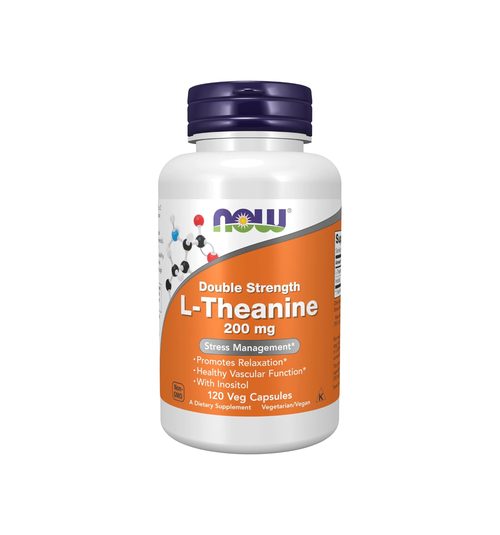
Most single-ingredient products come in 100mg, 150mg, or 200mg capsules (200mg is often labeled "double strength"), so it's easy to adjust by taking one or two. It reaches peak levels in the blood about 50 minutes after a capsule, so you'll know fairly quickly whether you notice it.
What to Look For When Buying
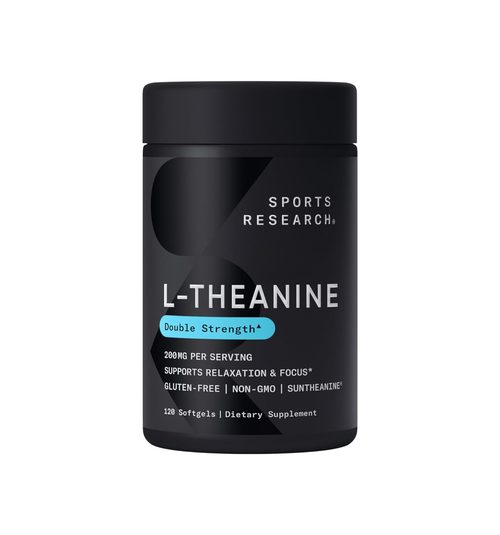
- Suntheanine vs. generic L-theanine. Suntheanine is a patented, branded form of L-theanine, and it (or theanine from the same maker) was used in several of the trials above, including both sleep studies. Choosing it is a way to buy the ingredient that was studied; a plain L-theanine product from a brand that publishes third-party testing is a reasonable alternative.
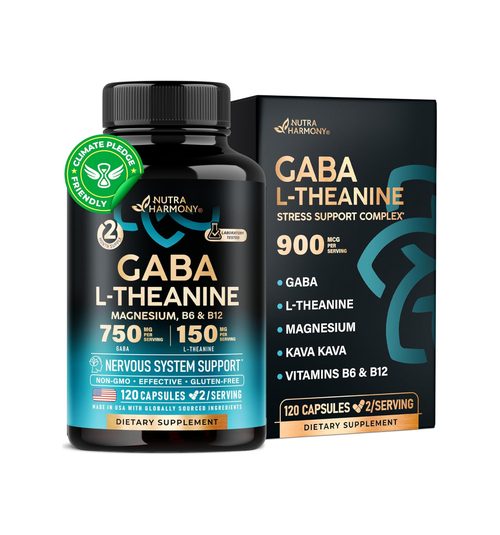
- Single ingredient vs. combination formulas. Some products pair L-theanine with GABA, magnesium, or B vitamins for a broader calming stack. That's fine, but if you want to know how L-theanine specifically affects you, a single-ingredient product makes it easier to judge.
- Format. Capsules and softgels are both common; softgels can be easier to swallow. Powders are cheapest per dose and dissolve easily into drinks.
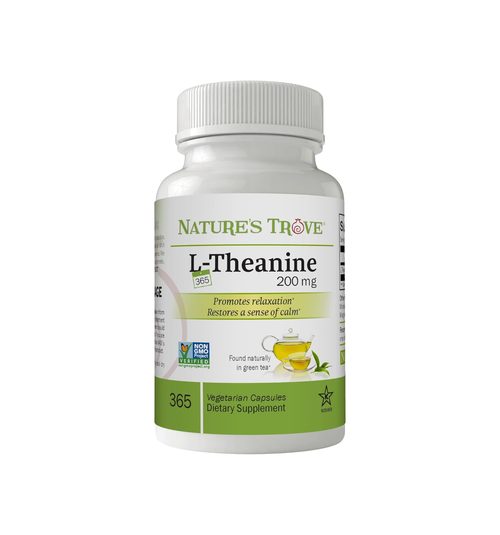
- Bottle size. Because it's often taken daily long-term, larger bottles (300+ capsules) lower the per-dose cost once you know it works for you.
Stacking L-Theanine
- With Rhodiola Rosea to soften Rhodiola's stimulating edge — see our Rhodiola guide and Rhodiola vs. L-Theanine for stress.
- With Lion's Mane in a morning coffee routine — see our Lion's Mane guide.
- With magnesium in the evening for a wind-down routine.
Side Effects and Who Should Be Careful
L-Theanine has been well tolerated in trials lasting up to 8 weeks, including at 900mg a day in adults and 400mg a day in children, but long-term use hasn't been studied. In one trial, a 250mg dose raised headache ratings. A few things to keep in mind:
- In small studies it blunted rises in blood pressure from caffeine or stress, so check with a doctor if you take blood pressure medication.
- If you take sedatives or other calming medications, ask a doctor before adding it.
- There isn't enough safety data during pregnancy or breastfeeding; see L-Theanine in pregnancy below.
- Some people feel its calming effect more distinctly than others, so try it on a low-stakes day first rather than right before something that requires peak sharpness.
L-Theanine in Pregnancy and Breastfeeding
L-Theanine supplements haven't been studied in pregnant or breastfeeding women. A search of the medical literature turns up only animal research and studies of tea in general, no human trials of theanine supplements during pregnancy. "Not studied" isn't the same as "known to be harmful", but it means nobody can tell you a safe supplement dose.
- Tea is a different question from capsules. A cup of black tea contains roughly 20mg of theanine, a tenth or less of a typical 200mg capsule. The bigger issue with tea in pregnancy is its caffeine, which counts toward the 200mg-a-day limit that the NHS and the American College of Obstetricians and Gynecologists advise during pregnancy.
- Check combination products. Many "focus" and energy supplements pair L-theanine with caffeine, sometimes 100mg or more per serving. The ones on this page don't contain caffeine, but some sleep and calm formulas add other herbs that also lack pregnancy data.
- The cautious approach: skip L-theanine supplements while pregnant or breastfeeding unless your doctor or midwife says otherwise, and bring the bottle to your appointment if you want to ask about a specific product.
Below are four L-Theanine products on HighIQ Nootropics — a combination formula, a full year's supply of a single-ingredient capsule, a double-strength option with inositol, and a Suntheanine softgel.